Home / Game Library

TABLE Method™ game guides

Game Library

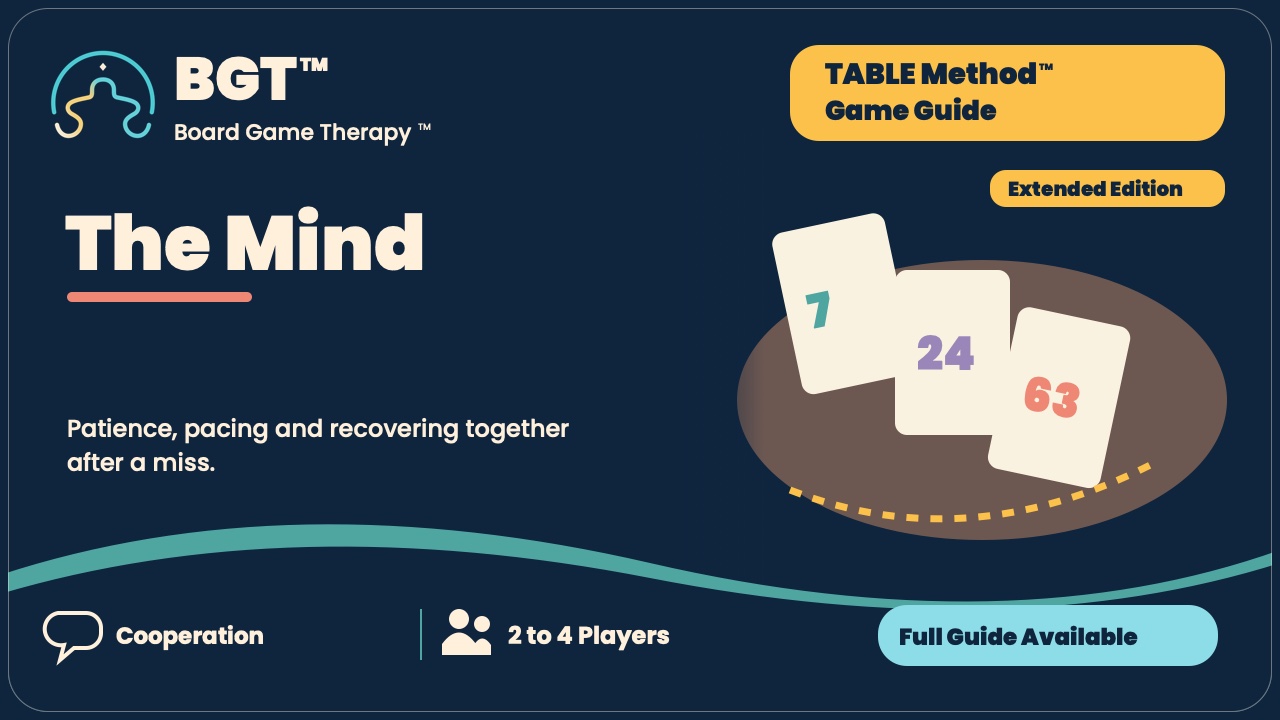
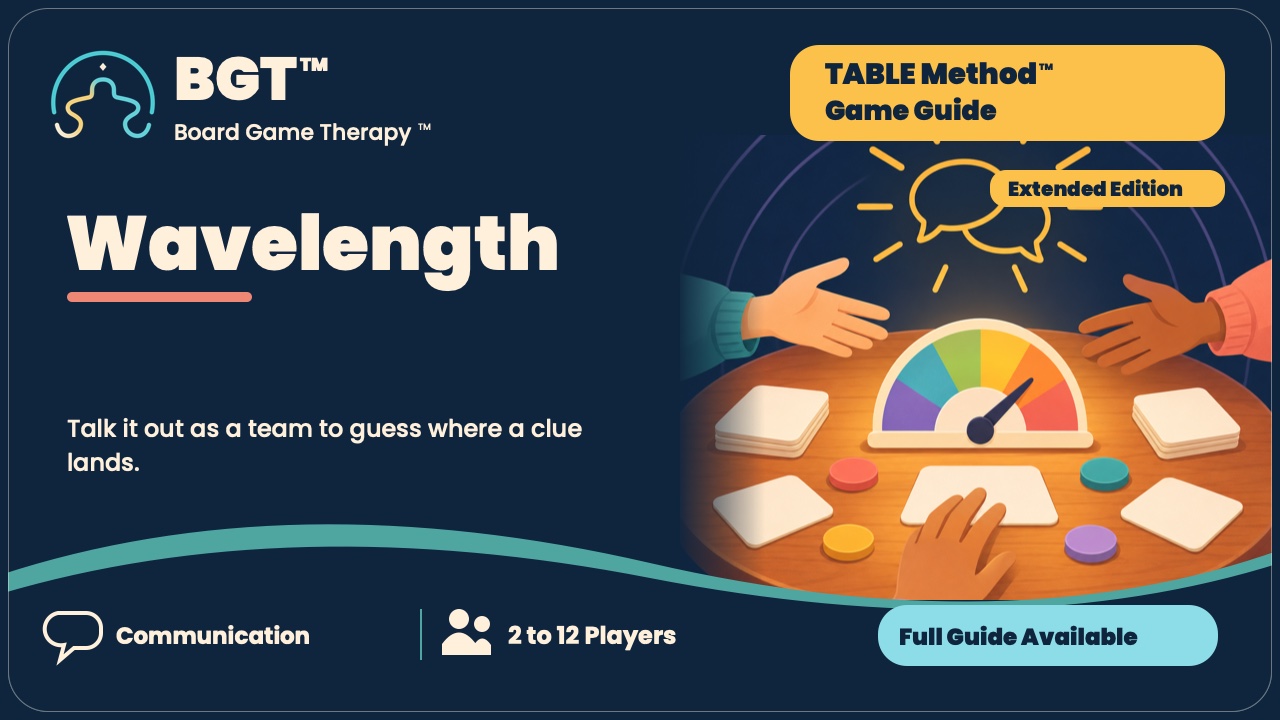
Find a game for the goal you have. Filter by what you want to make room for at the table, or by the kind of game. Every game here has a free guide page with a variation and the TABLE Method™ plan. 30 full guides are available now as $7 PDFs. Games are not included. The The Mind and Wavelength guides are in the Shop now; their free pages are on the way.

Goal (Game-to-Goal families)

Game type

Relational demand
Showing 30 of 30 games

Free guide Full guide live

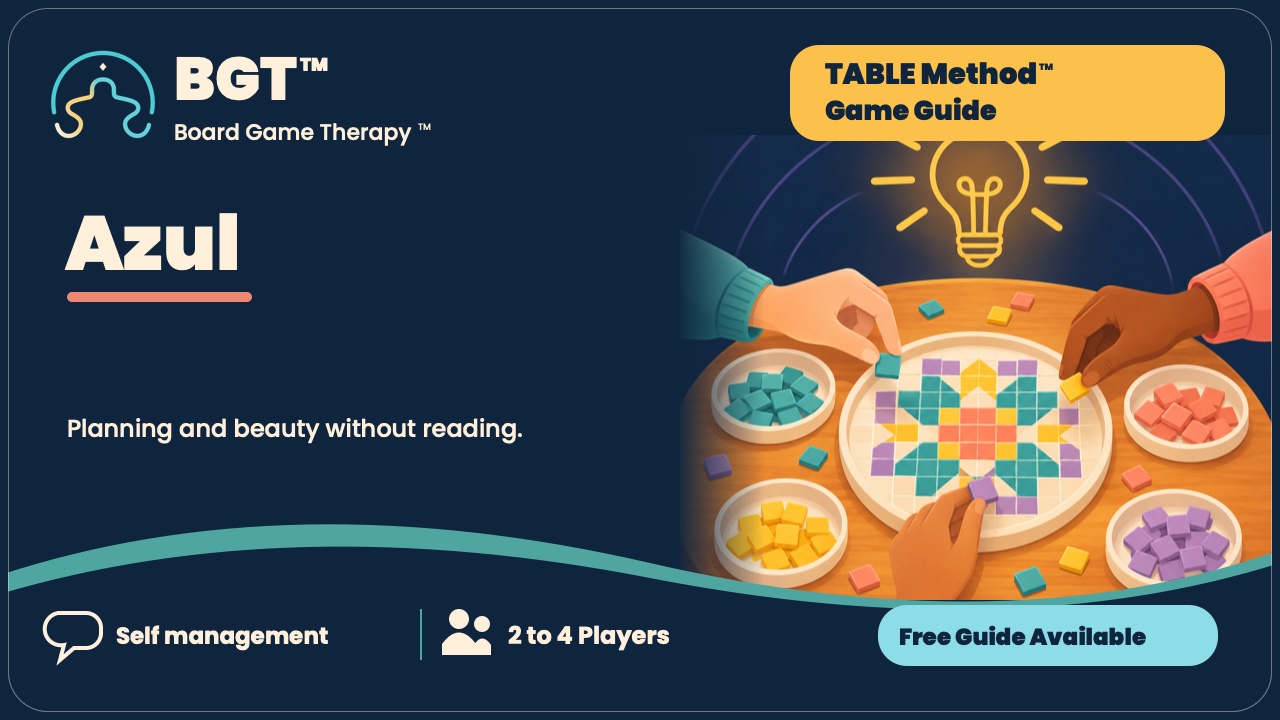
Azul

Planning and beauty without reading.

  • Players 2 to 4
  • Session 45 to 60 minutes with teaching and debrief
  • Relational demand Stage 1 to 2

Goals:

  • Self-management
  • Belonging
  • Competitive
  • Drafting
  • Tile placement

Free guide Full guide live

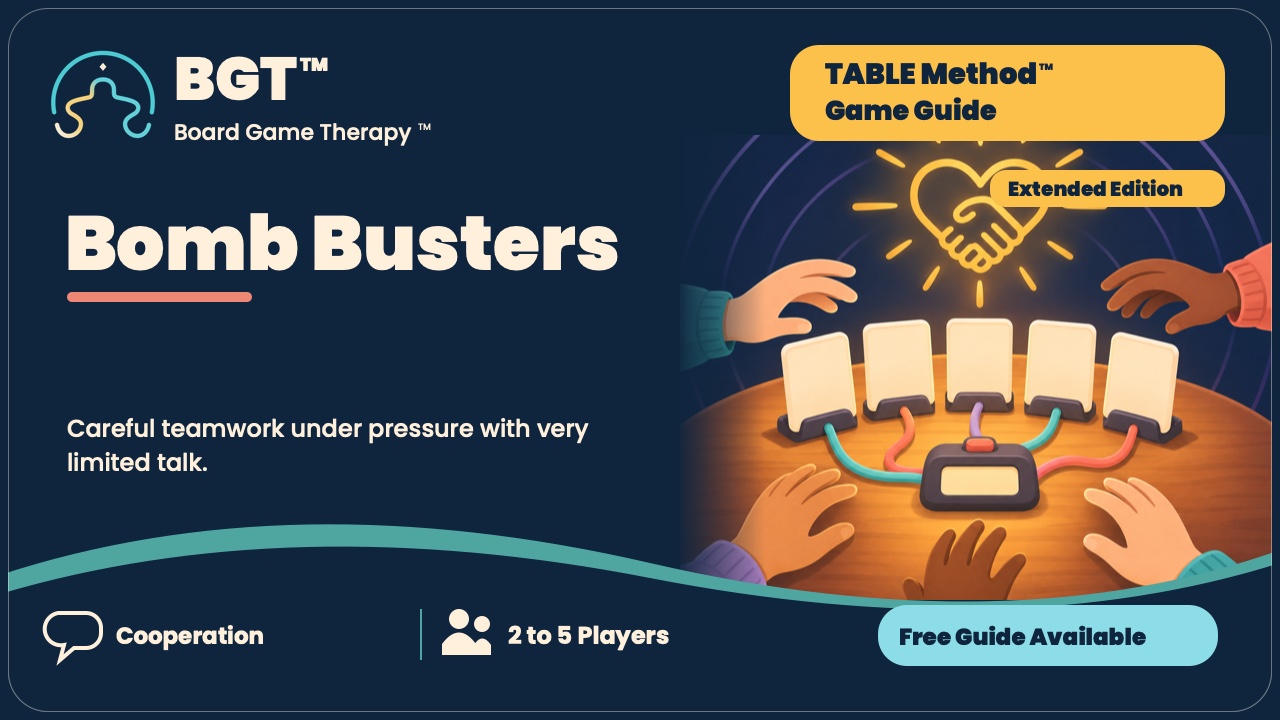
Bomb Busters

Careful teamwork under pressure with very limited talk.

  • Players 2 to 5
  • On the box About 30 minutes
  • Session 50 to 60 minutes with teaching and debrief
  • Relational demand Stage 3

Goals:

  • Cooperation
  • Self-management
  • Cooperative
  • Limited communication
  • Deduction

Free guide Full guide live

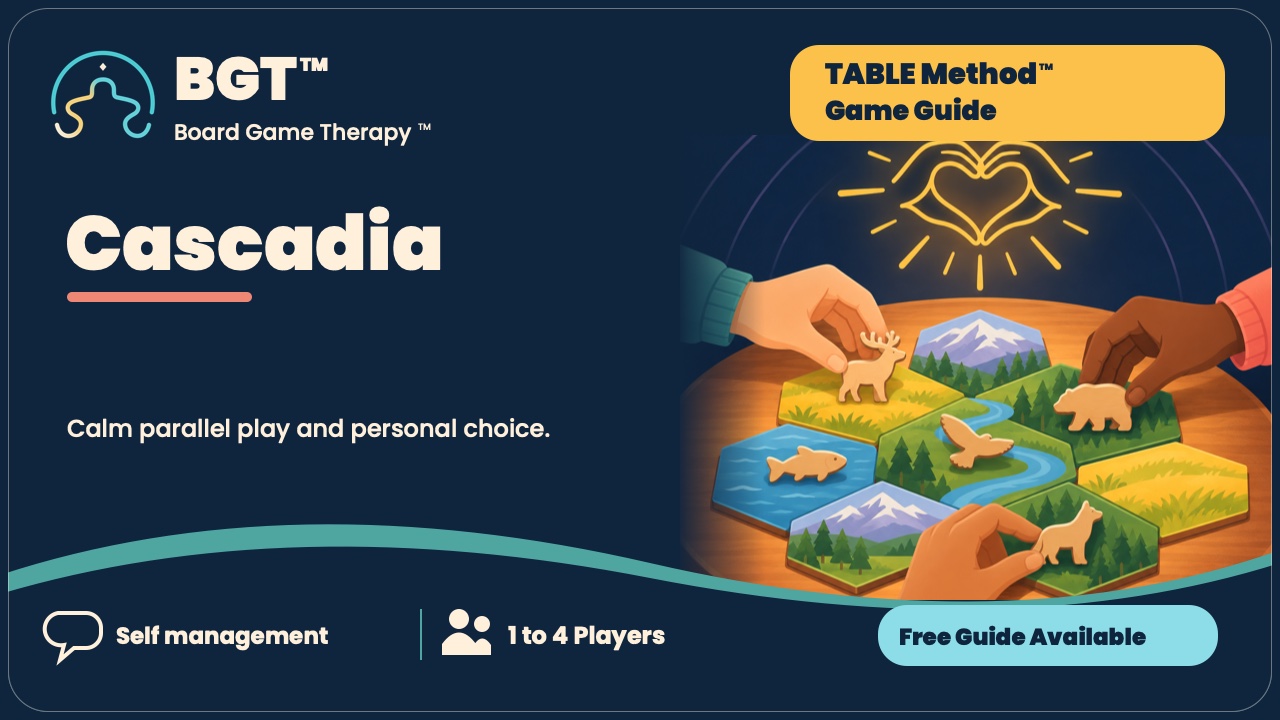
Cascadia

Calm parallel play and personal choice.

  • Players 1 to 4, with a solo mode
  • On the box 30 to 45 minutes
  • Session 60 to 75 minutes with teaching and debrief
  • Relational demand Stage 1 to 2

Goals:

  • Self-management
  • Perspective
  • Competitive
  • Drafting
  • Tile placement

Free guide Full guide live

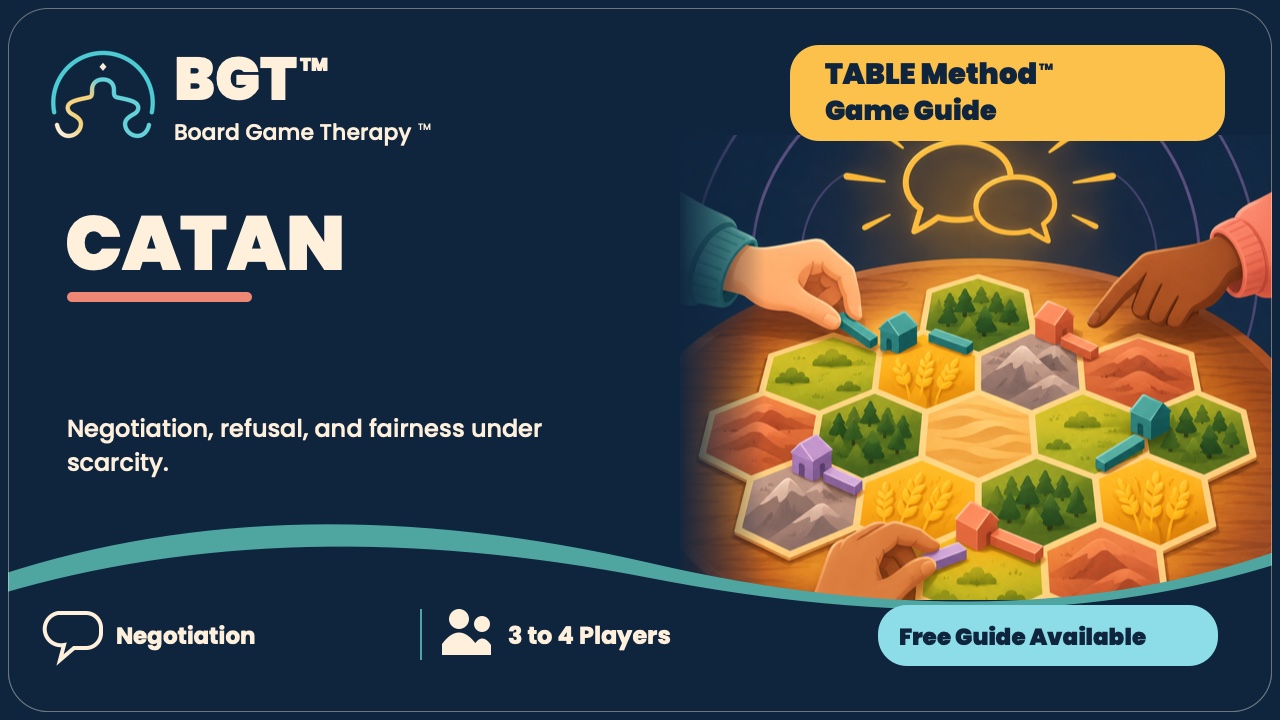
CATAN

Negotiation, refusal, and fairness under scarcity.

  • Players 3 to 4 (5 to 6 with an extension)
  • On the box 60 to 90 minutes
  • Session 100 to 130 minutes with teaching and debrief, or a shortened game
  • Relational demand Stage 4

Goals:

  • Negotiation
  • Competitive
  • Negotiation and trading

Free guide Full guide live

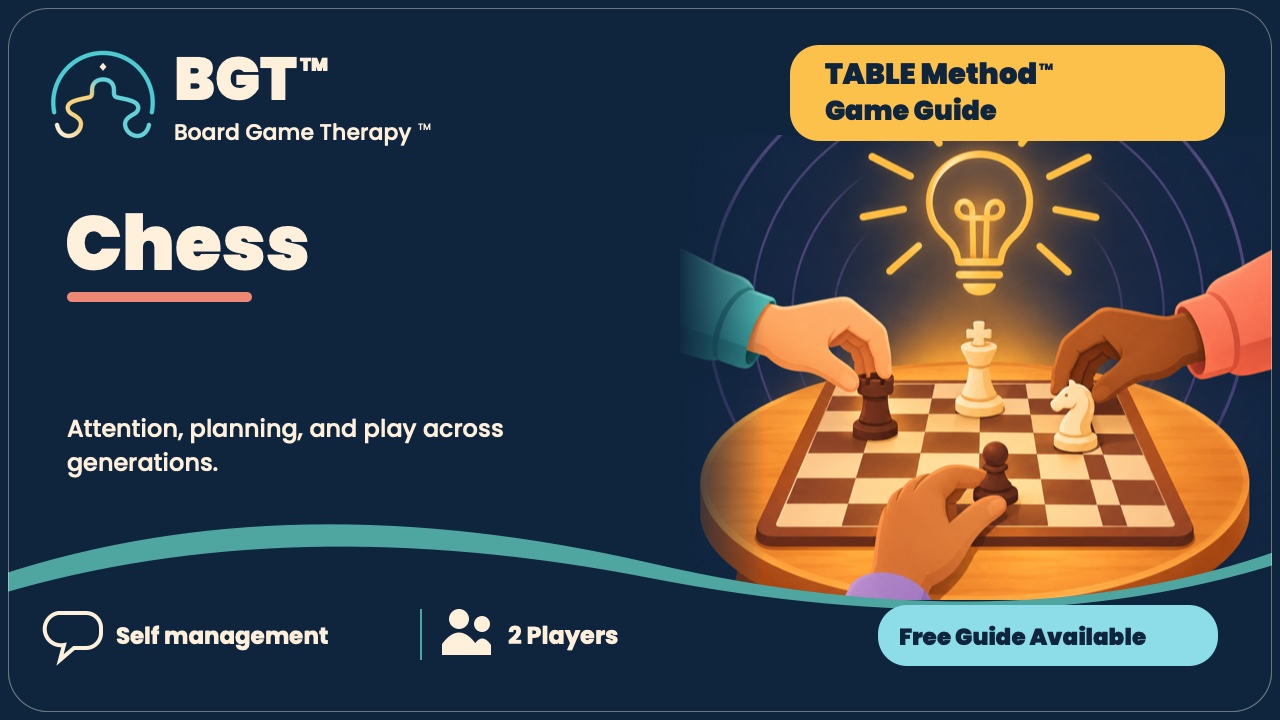
Chess

Attention, planning, and play across generations.

  • Players 2
  • Session 30 to 60 minutes per game, with debrief
  • Relational demand Stage 1 to 2

Goals:

  • Self-management
  • Belonging
  • Competitive
  • Abstract strategy

Free guide Full guide live

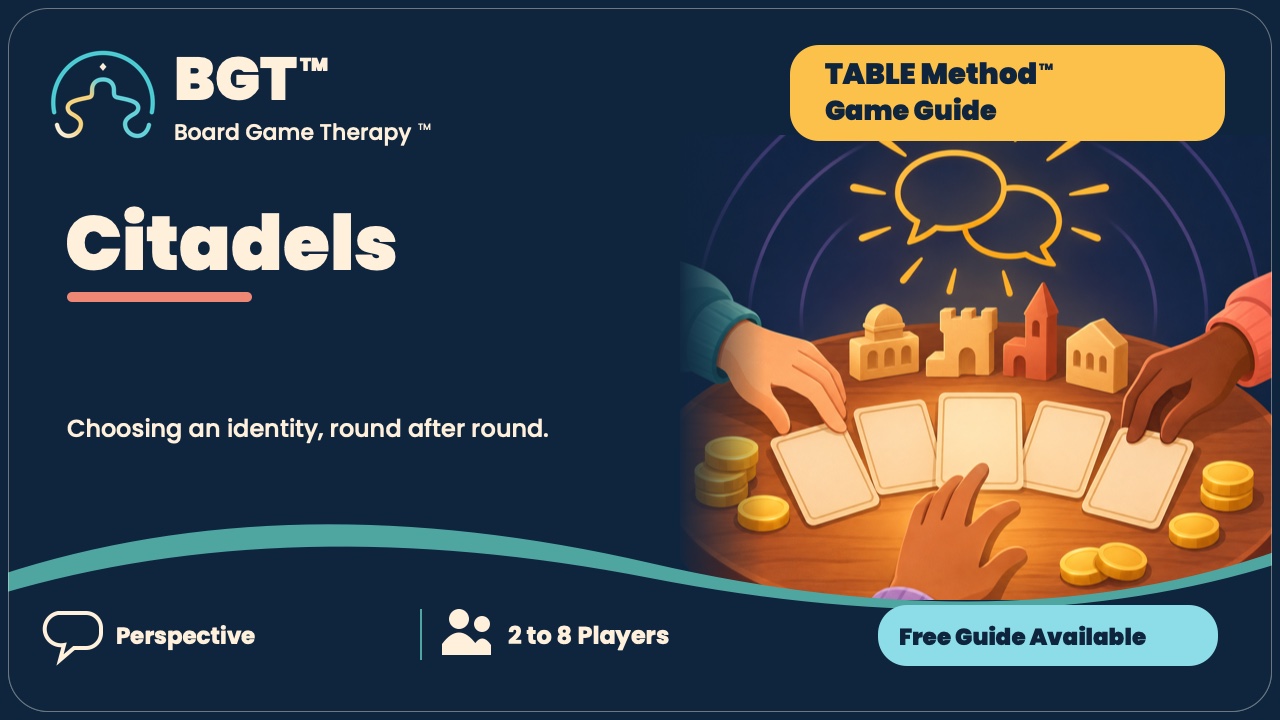
Citadels

Choosing an identity, round after round.

  • Players 2 to 8
  • On the box 30 to 60 minutes
  • Session 60 to 90 minutes with teaching and debrief
  • Relational demand Stage 4

Goals:

  • Perspective
  • Negotiation
  • Competitive
  • Drafting
  • Hidden roles and bluffing

Free guide Full guide live

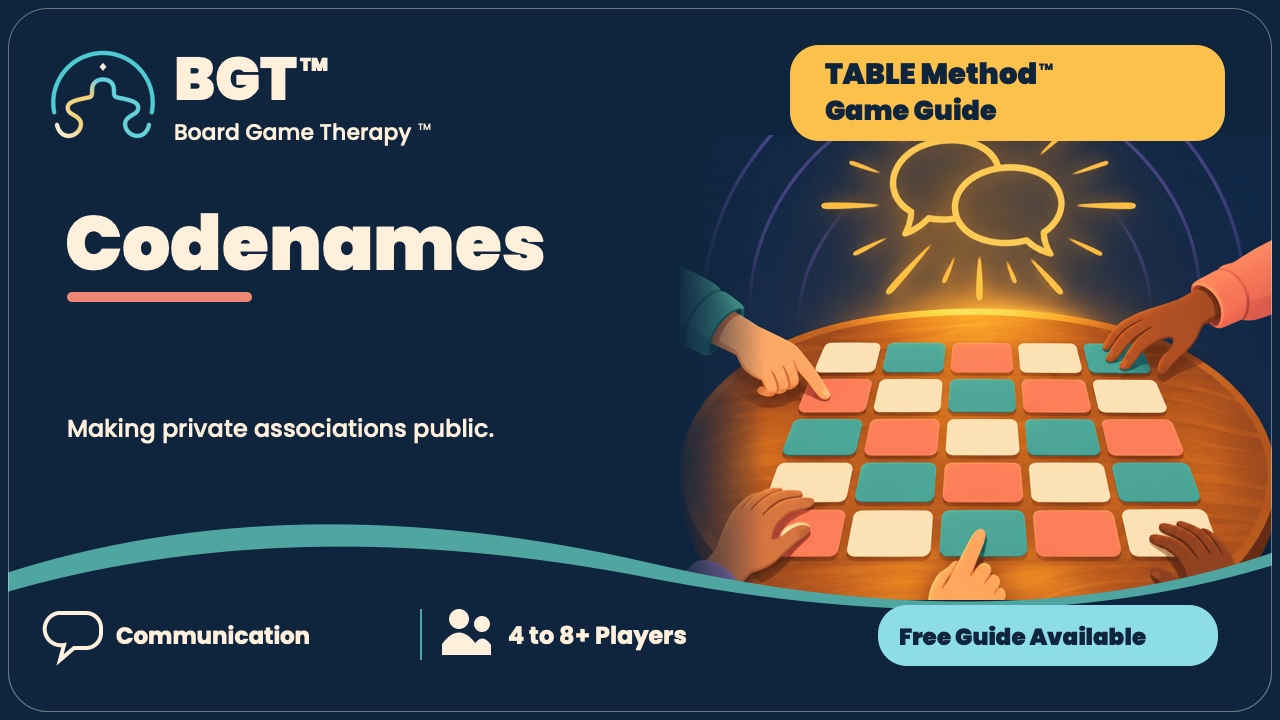
Codenames

Making private associations public.

  • Players 4 to 8+ (current listing; 2 and 3 player variants exist)
  • On the box About 15 minutes per game
  • Session 45 to 60 minutes for two or three games and a debrief
  • Relational demand Stage 3

Goals:

  • Communication
  • Perspective
  • Team vs team
  • Party and word
  • Clue-giving
  • Deduction

Free guide Full guide live

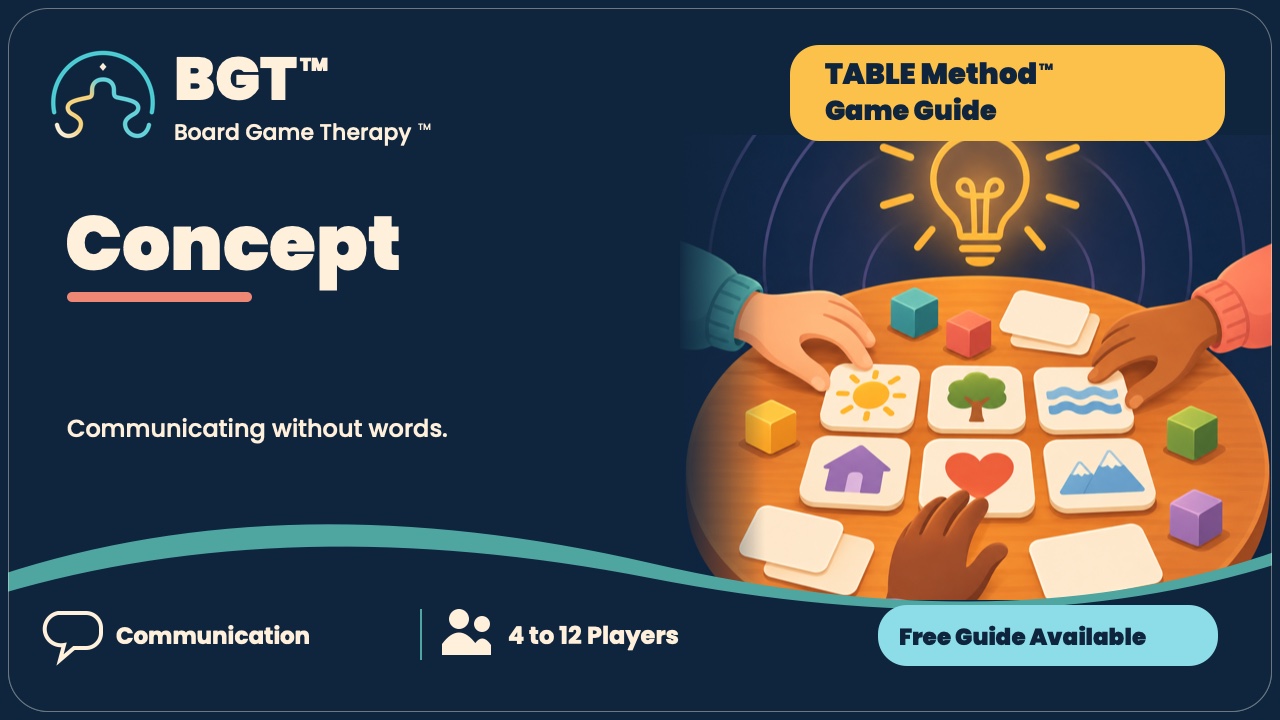
Concept

Communicating without words.

  • Players 4 to 12 (publisher listing)
  • On the box About 40 minutes
  • Session 40 to 55 minutes with teaching and debrief
  • Relational demand Stage 2 to 3

Goals:

  • Communication
  • Perspective
  • Party and word
  • Clue-giving

Free guide Full guide live

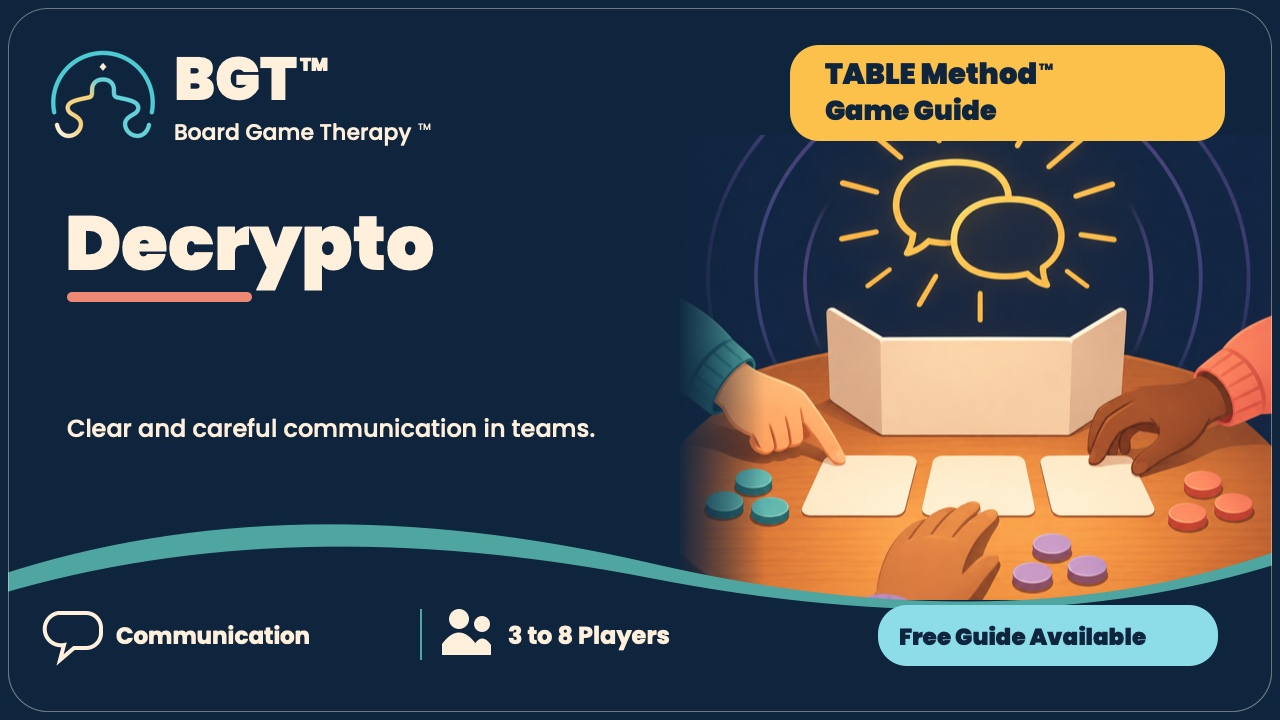
Decrypto

Clear and careful communication in teams.

  • Players 3 to 8 (two teams; 3-player rules included)
  • On the box 15 to 45 minutes
  • Session 60 to 75 minutes with teaching and debrief
  • Relational demand Stage 3 to 4

Goals:

  • Communication
  • Belonging
  • Team vs team
  • Party and word
  • Clue-giving
  • Deduction

Free guide Full guide live

Dixit

Perspective-taking with images that mean more than one thing.

  • Players 3 to 8 (current edition)
  • On the box About 30 minutes
  • Session 45 to 60 minutes with teaching and debrief
  • Relational demand Stage 2 to 3

Goals:

  • Perspective
  • Communication
  • Competitive
  • Party and word
  • Interpretive imagery

Free guide Full guide live

Gloomhaven

Long-form cooperation and characters that change over time.

  • Players 1 to 4
  • On the box Long; varies by scenario and experience
  • Session About 2 hours for groups who know the game; 3 hours or more for new players
  • Relational demand Stage 3

Goals:

  • Cooperation
  • Cooperative
  • Long-form campaign

Free guide Full guide live

Hanabi

Modeling what someone else knows.

  • Players 2 to 5
  • On the box About 30 minutes
  • Session 50 to 65 minutes with teaching and debrief
  • Relational demand Stage 3

Goals:

  • Communication
  • Self-management
  • Cooperation
  • Cooperative
  • Limited communication
  • Deduction

Free guide Full guide live

Harmonies

Calm building, planning, and making room for others.

  • Players 1 to 4, with a solo mode in the rulebook
  • On the box 30 to 45 minutes
  • Session 60 to 75 minutes with teaching and debrief
  • Relational demand Stage 1 to 2

Goals:

  • Self-management
  • Perspective
  • Competitive
  • Drafting
  • Tile placement

Free guide Full guide live

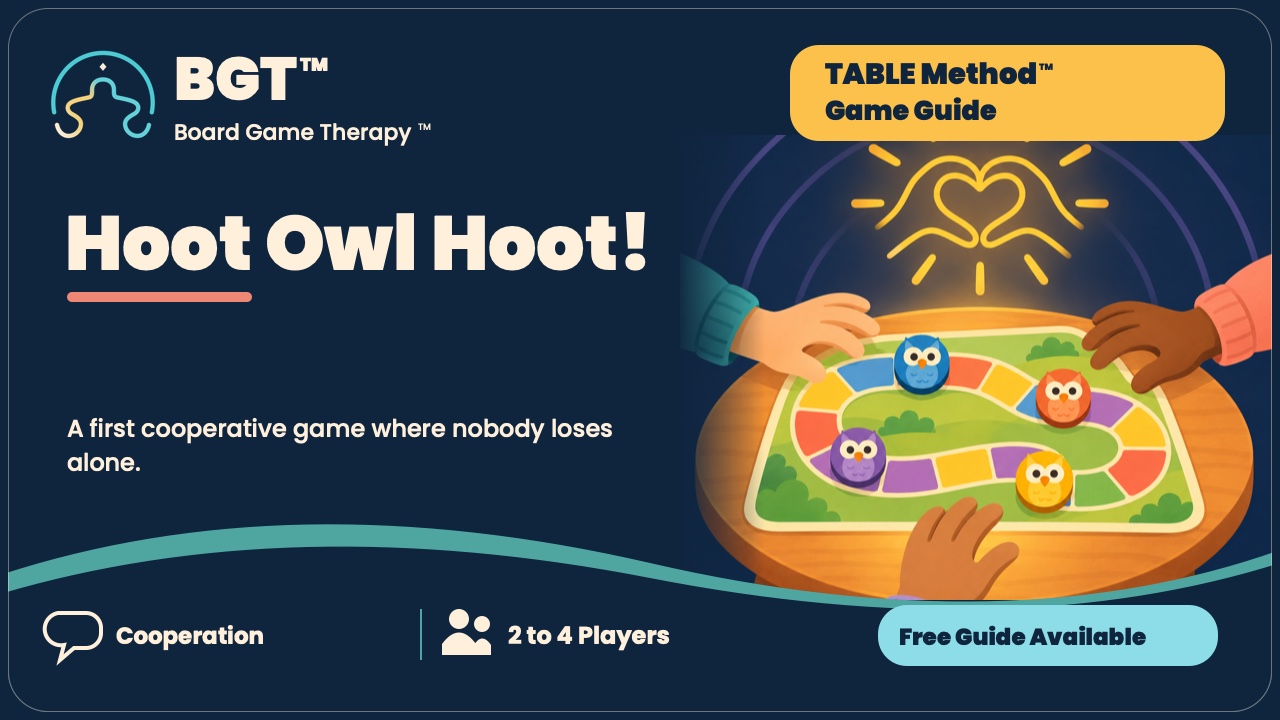
Hoot Owl Hoot!

A first cooperative game where nobody loses alone.

  • Players 2 to 4
  • On the box About 15 minutes
  • Session About 25 to 40 minutes; one game is enough
  • Relational demand Stage 3

Goals:

  • Cooperation
  • Communication
  • Cooperative
  • Young kids and family

Free guide Full guide live

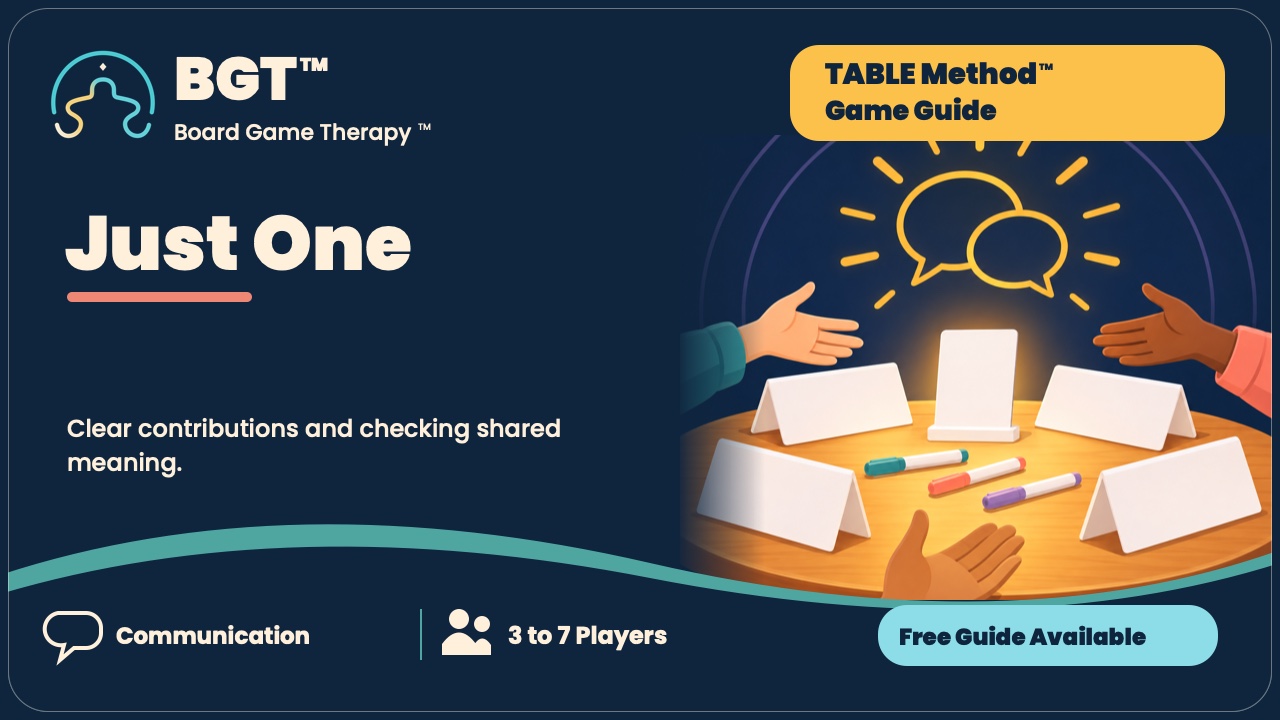
Just One

Clear contributions and checking shared meaning.

  • Players 3 to 7
  • Session 30 to 45 minutes with teaching and debrief
  • Relational demand Stage 1 to 2

Goals:

  • Communication
  • Belonging
  • Cooperative
  • Party and word
  • Clue-giving

Free guide Full guide live

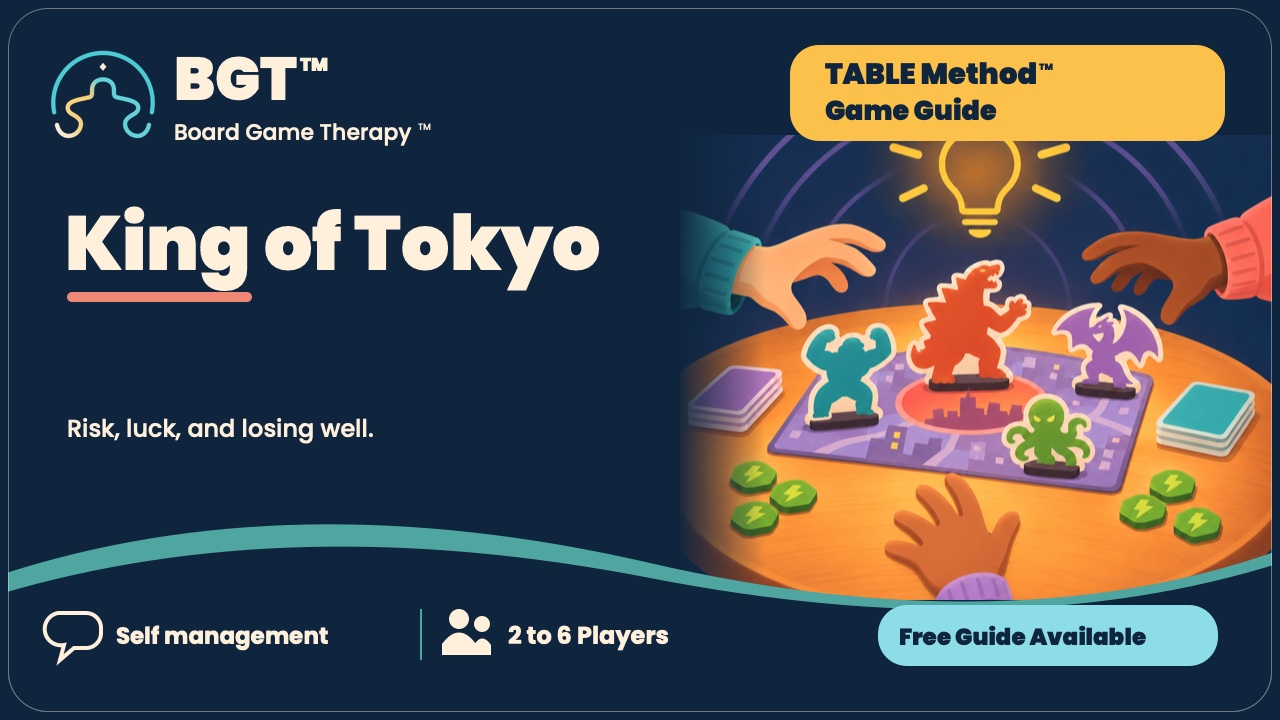
King of Tokyo

Risk, luck, and losing well.

  • Players 2 to 6
  • On the box About 30 minutes
  • Session 50 to 60 minutes with teaching and debrief
  • Relational demand Stage 3 to 4

Goals:

  • Self-management
  • Competitive
  • Push your luck

Free guide Full guide live

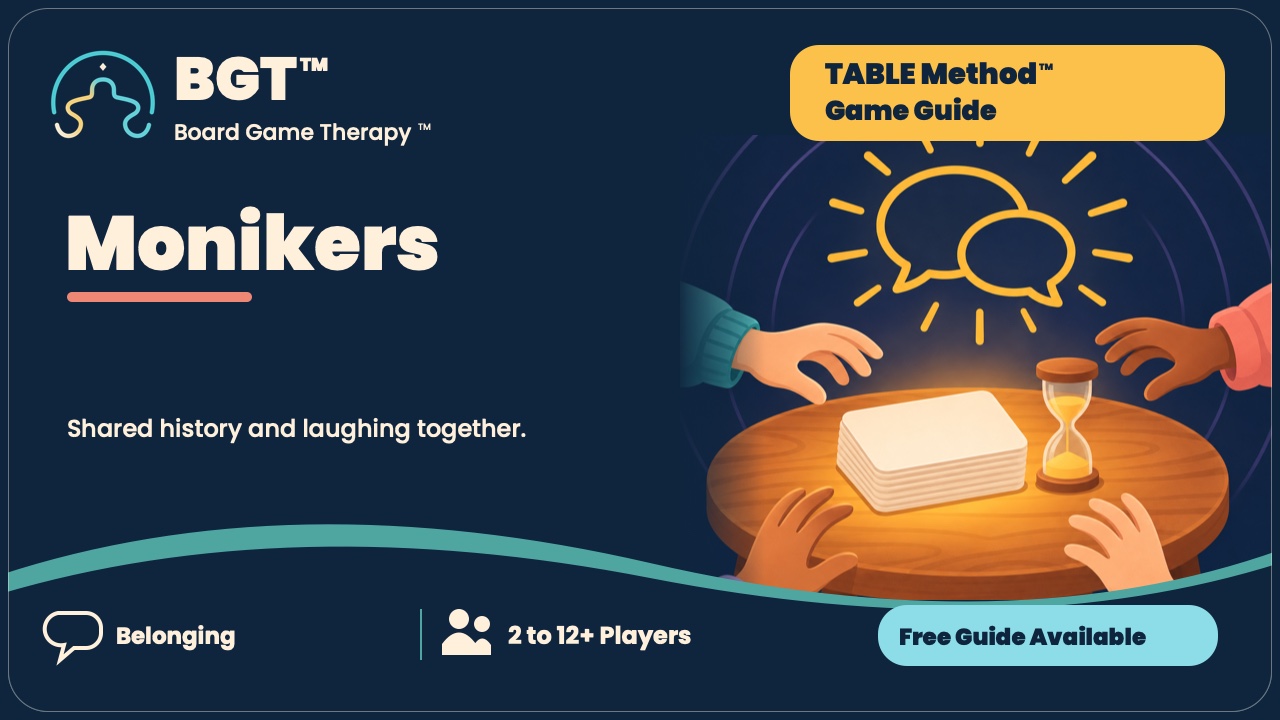
Monikers

Shared history and laughing together.

  • Players 2 to 12+ (publisher listing); classic co-op variant for 4 or fewer
  • On the box About 30 minutes
  • Session 45 to 60 minutes with teaching and debrief
  • Relational demand Stage 3

Goals:

  • Belonging
  • Communication
  • Team vs team
  • Party and word
  • Clue-giving

Free guide Full guide live

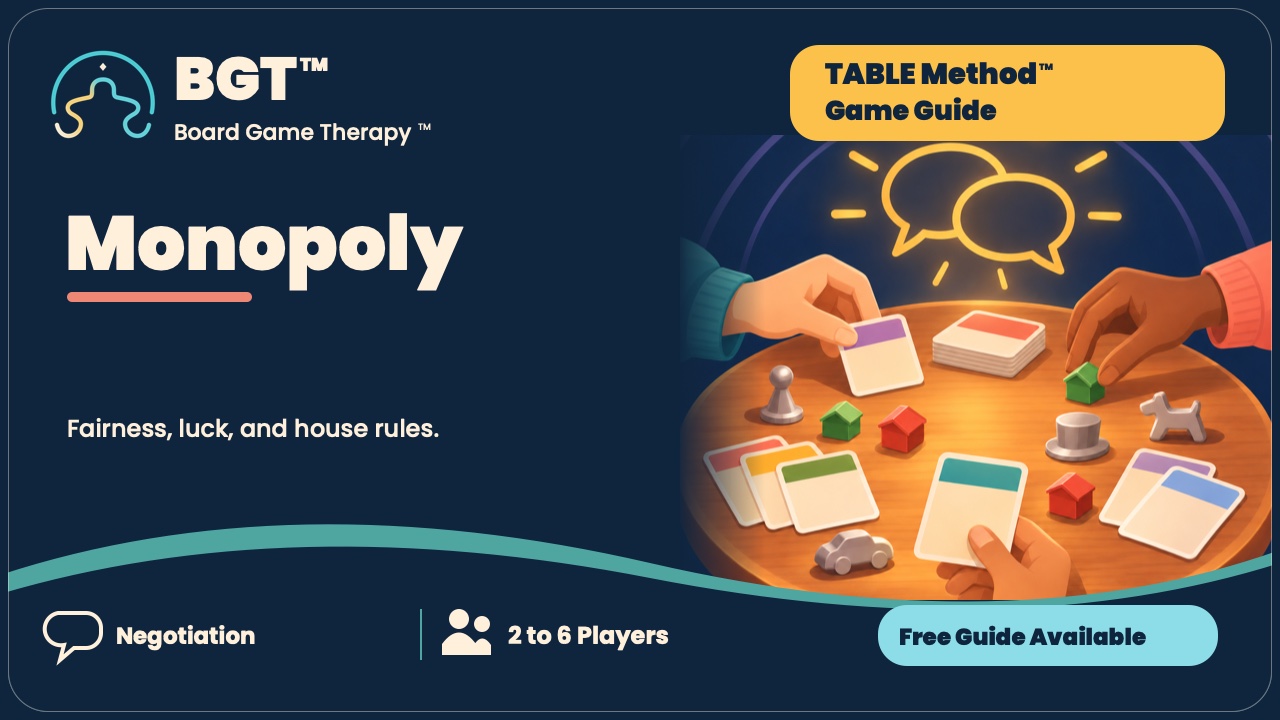
Monopoly

Fairness, luck, and house rules.

  • Players 2 to 6 (Monopoly Classic)
  • Session 60 to 90 minutes with a time limit and debrief
  • Relational demand Stage 2 to 4

Goals:

  • Negotiation
  • Competitive
  • Negotiation and trading

Free guide Full guide live

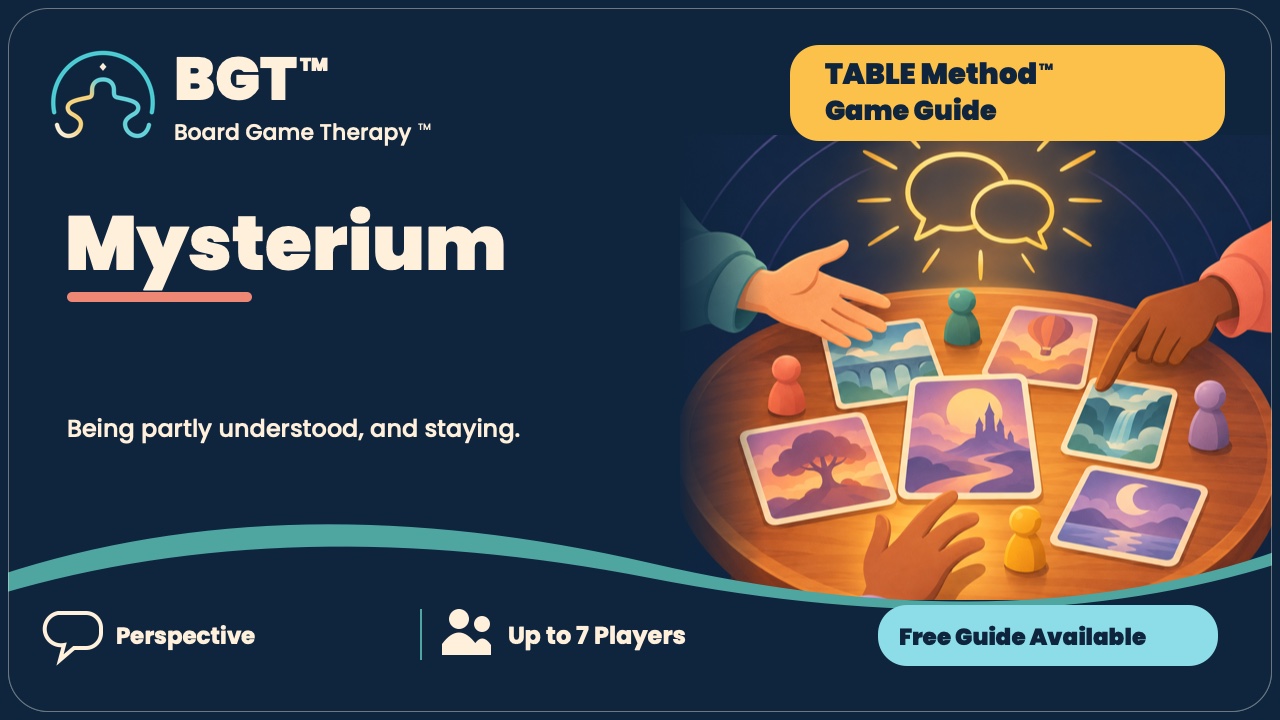
Mysterium

Being partly understood, and staying.

  • Players Up to 7: one ghost and the psychics
  • Session 75 to 95 minutes for beginners with teaching and debrief
  • Relational demand Stage 3

Goals:

  • Perspective
  • Cooperation
  • Cooperative
  • Limited communication
  • Deduction
  • Interpretive imagery

Free guide Full guide live

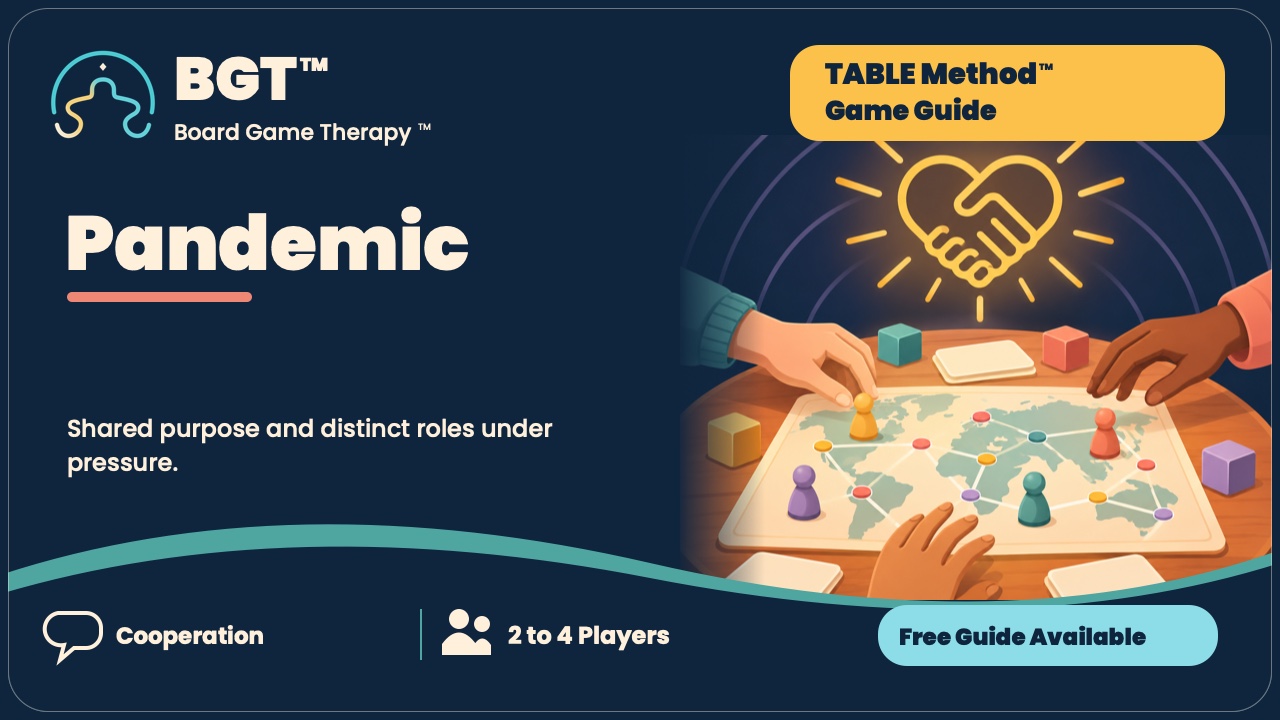
Pandemic

Shared purpose and distinct roles under pressure.

  • Players 2 to 4
  • On the box About 45 minutes
  • Session 70 to 90 minutes with teaching and debrief
  • Relational demand Stage 3

Goals:

  • Cooperation
  • Cooperative

Free guide Full guide live

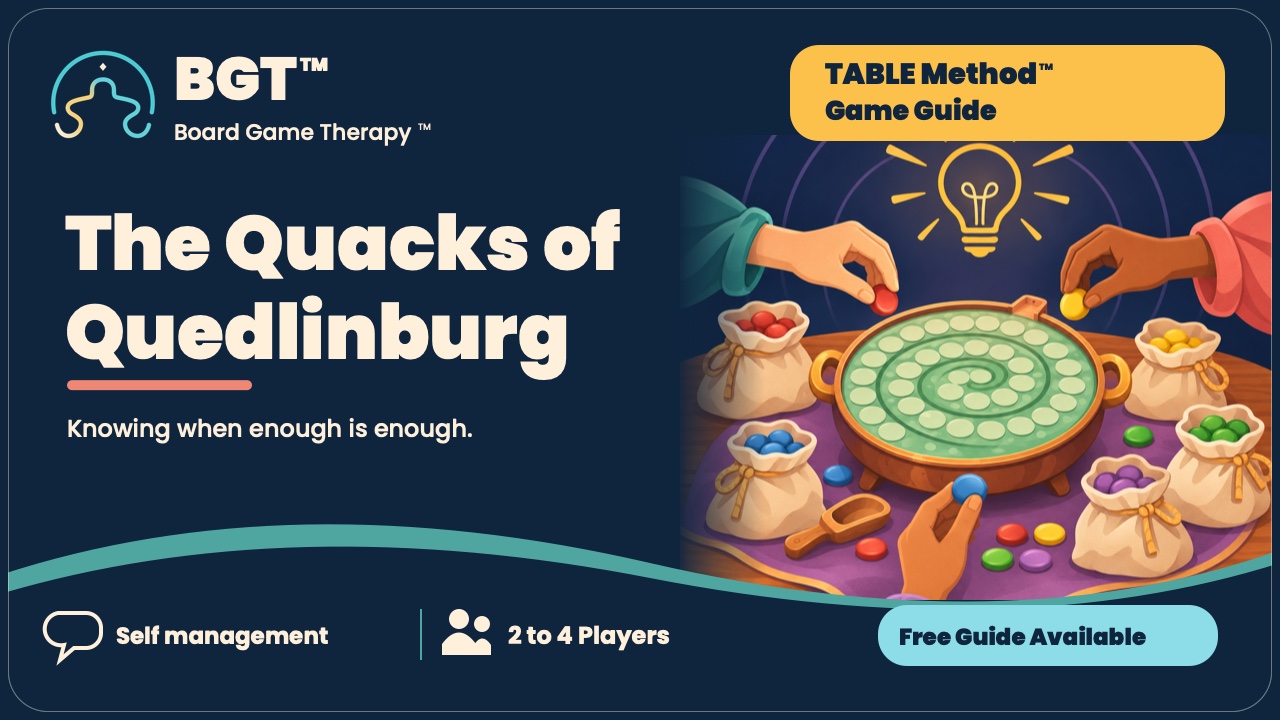
The Quacks of Quedlinburg

Knowing when enough is enough.

  • Players 2 to 4
  • On the box About 45 minutes
  • Session 70 to 90 minutes with teaching and debrief
  • Relational demand Stage 2

Goals:

  • Self-management
  • Competitive
  • Push your luck

Free guide Full guide live

Sheriff of Nottingham

Credibility, bluffing, and negotiation under unequal power.

  • Players 3 to 6 (2nd edition)
  • On the box About 60 minutes
  • Session 80 to 100 minutes with teaching, consent conversation, and debrief
  • Relational demand Stage 4

Goals:

  • Negotiation
  • Competitive
  • Negotiation and trading
  • Hidden roles and bluffing

Free guide Full guide live

So Clover!

Shared meaning and being understood.

  • Players 3 to 6
  • On the box About 30 minutes
  • Session 50 to 60 minutes with teaching and debrief
  • Relational demand Stage 3

Goals:

  • Communication
  • Perspective
  • Cooperative
  • Party and word
  • Clue-giving

Free guide Full guide live

Spirit Island

Distributed leadership and letting others hold a territory.

  • Players 1 to 4
  • On the box 90 to 120 minutes once known (rulebook)
  • Session 2.5 to 3 hours with teaching and debrief
  • Relational demand Stage 3

Goals:

  • Cooperation
  • Cooperative
  • Long-form campaign

Free guide Full guide live

Sushi Go!

Brief, rule-bounded exchanges.

  • Players 2 to 5
  • On the box About 15 minutes
  • Session 30 to 40 minutes with teaching and debrief
  • Relational demand Stage 2

Goals:

  • Belonging
  • Perspective
  • Competitive
  • Drafting
  • Young kids and family

Free guide Full guide live

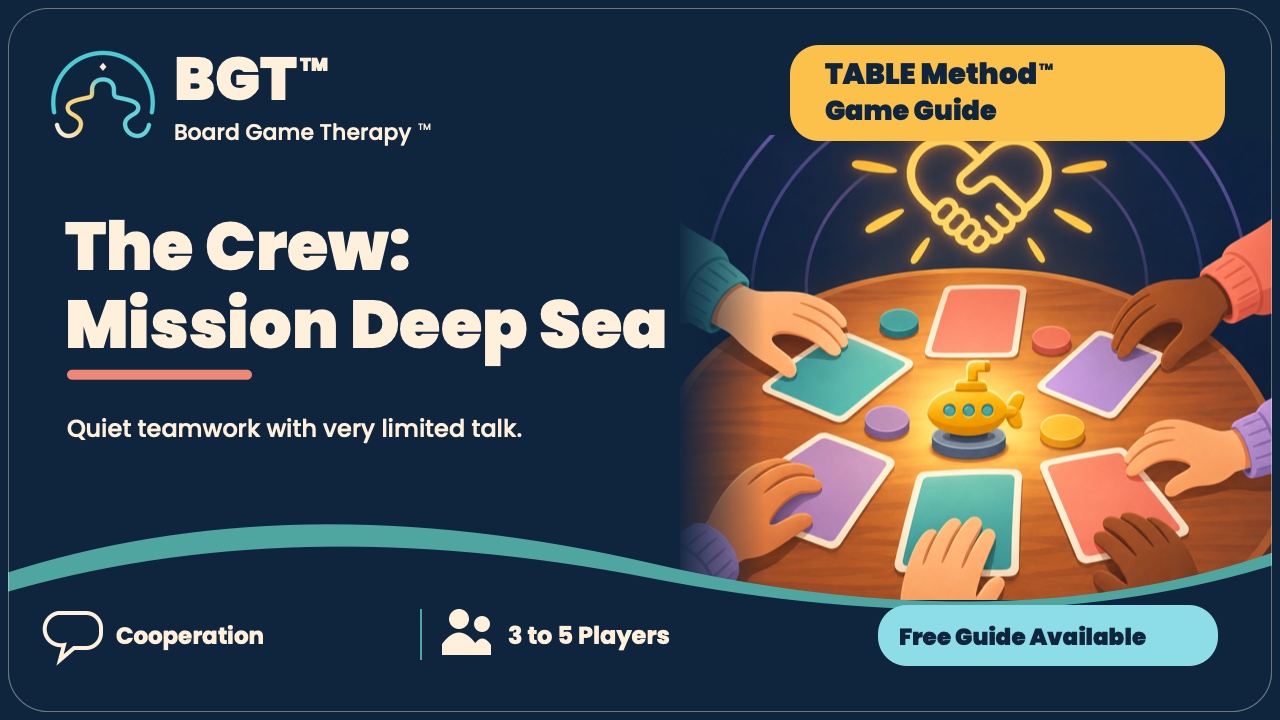
The Crew: Mission Deep Sea

Quiet teamwork with very limited talk.

  • Players 3 to 5, with a 2-player variant in the rulebook
  • On the box About 20 minutes
  • Session 45 to 60 minutes with teaching and debrief
  • Relational demand Stage 3

Goals:

  • Cooperation
  • Communication
  • Self-management
  • Cooperative
  • Limited communication

Free guide Full guide live

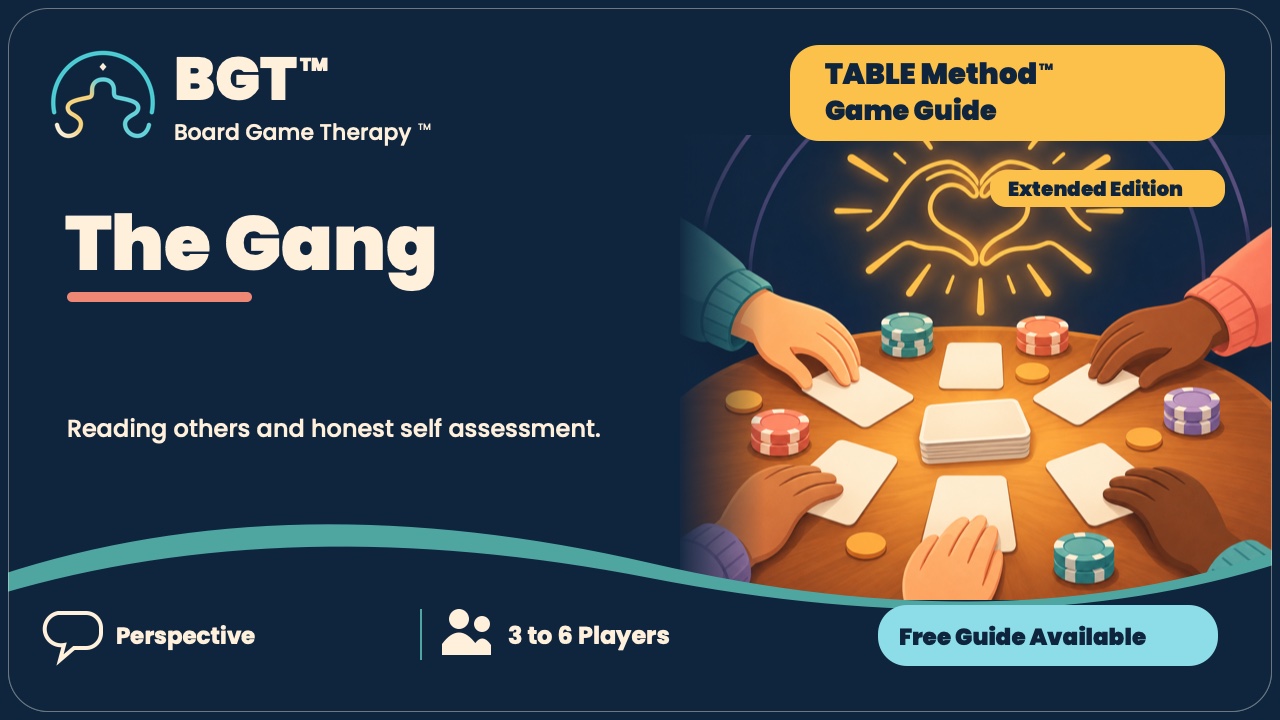
The Gang

Reading others and honest self-assessment.

  • Players 3 to 6
  • On the box About 20 minutes
  • Session 50 to 60 minutes with teaching and debrief
  • Relational demand Stage 3

Goals:

  • Perspective
  • Self-management
  • Cooperative
  • Limited communication
  • Deduction

Free guide Full guide live

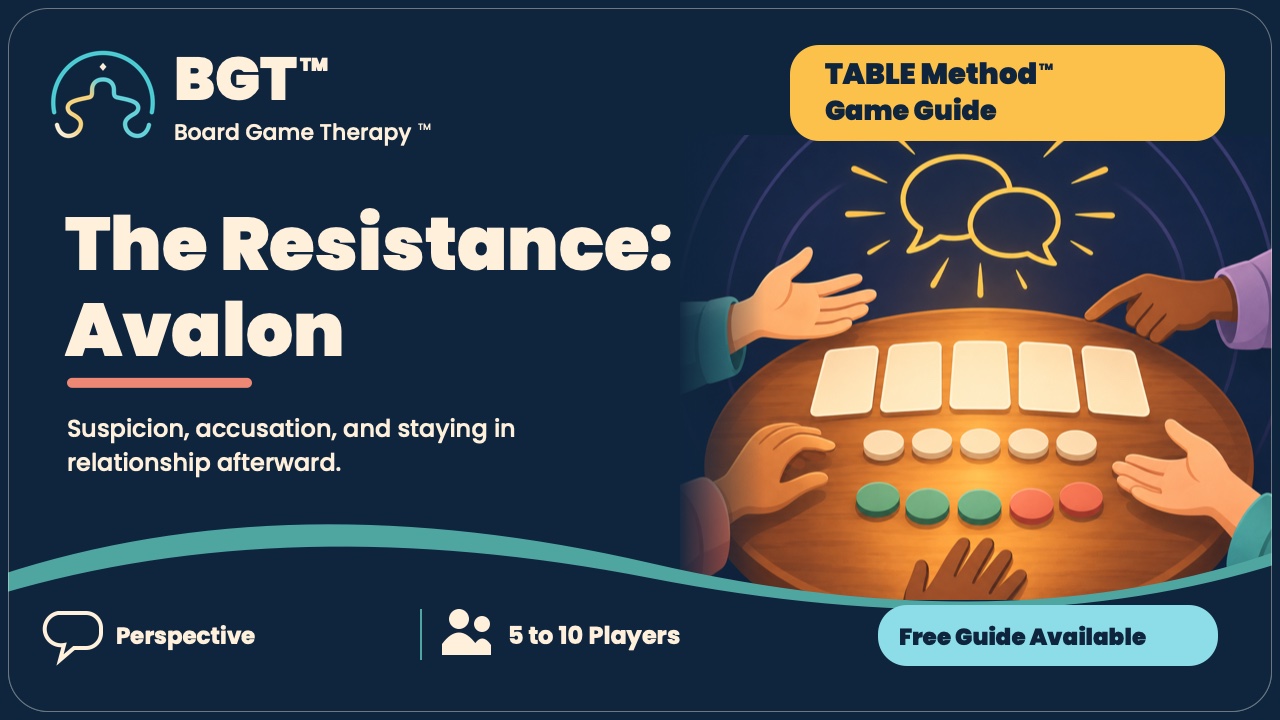
The Resistance: Avalon

Suspicion, accusation, and staying in relationship afterward.

  • Players 5 to 10
  • On the box About 30 minutes
  • Session 60 to 80 minutes with consent conversation, play, and debrief
  • Relational demand Stage 5

Goals:

  • Perspective
  • Negotiation
  • Team vs team
  • Hidden roles and bluffing
  • Deduction

Free guide Full guide live

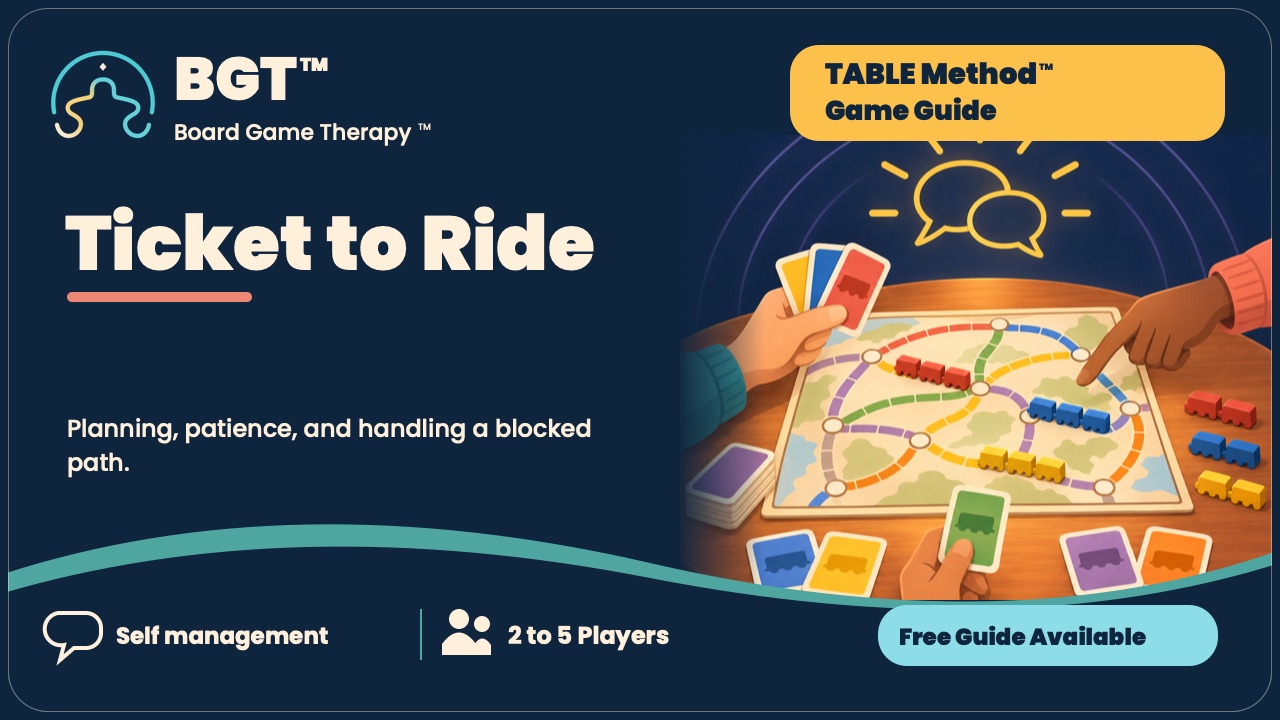
Ticket to Ride

Planning, patience, and handling a blocked path.

  • Players 2 to 5
  • On the box 30 to 60 minutes
  • Session 75 to 90 minutes with teaching and debrief
  • Relational demand Stage 2

Goals:

  • Self-management
  • Competitive
  • Young kids and family

Free guide Full guide live

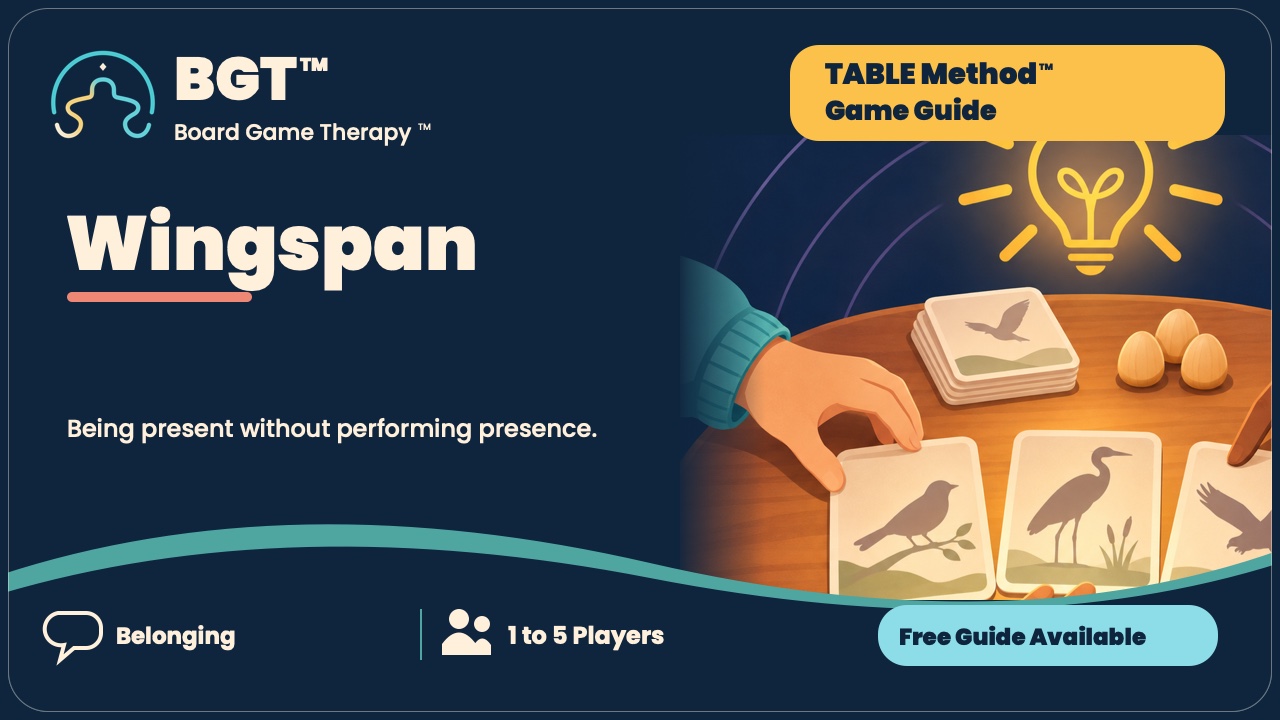
Wingspan

Being present without performing presence.

  • Players 1 to 5
  • On the box 40 to 70 minutes
  • Session 90 to 120 minutes for beginners; 75 to 90 with Short flight
  • Relational demand Stage 1

Goals:

  • Belonging
  • Self-management
  • Competitive
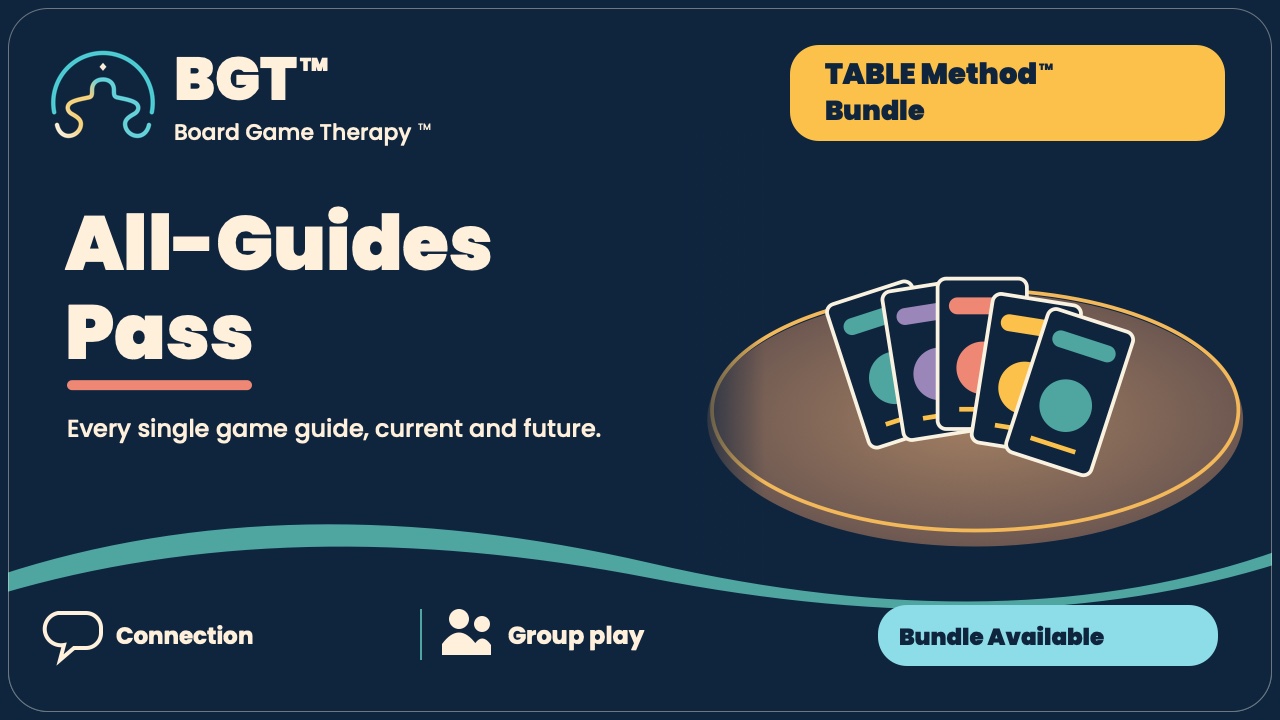
All Guides Pass, TABLE Method™ Bundle

All-Guides Pass Now available

Every $7 TABLE Method™ single-game guide in the store, 32 today, plus every new one we add, for $49 one time. Save $175 vs. buying 32 guides separately (78% off). Early Adopter price: $49 for the first 20 Board Game Therapy™ adopters. Then the price goes up $10. Early buyers keep their access at the price they paid.

Get the All-Guides Pass · $49

How the Filters Work

Goal uses the six Goal families from the BGT™ Game-to-Goal Card Deck. Each game is tagged with the families its guide's TABLE Method™ Target names, such as checking meaning, sharing decisions, or recovering from a setback. A target is an opportunity to watch for, not something every player has to show.

Relational demand is the suggested stage on the Social Engagement Progression from the guide: the book's placement where it has one, otherwise a BGT suggestion. Stages describe interpersonal demand, not skill or clinical status, and a lighter game is often the right choice.

Pick more than one chip in a row to see games that match any of them. Picks in different rows narrow the list. The address bar keeps your filters, so you can share the link.

Each guide is a facilitation resource for hosts, teachers, coaches and licensed clinicians. Board Game Therapy™ is not inherently psychotherapy. Game names are trademarks of their owners and are used only to identify the games. Not affiliated with any game publisher.